
About This Holiday Lighting Guide
Prepared by: Holiday Illumination Christmas Light Installation
Last updated: October 22, 2026
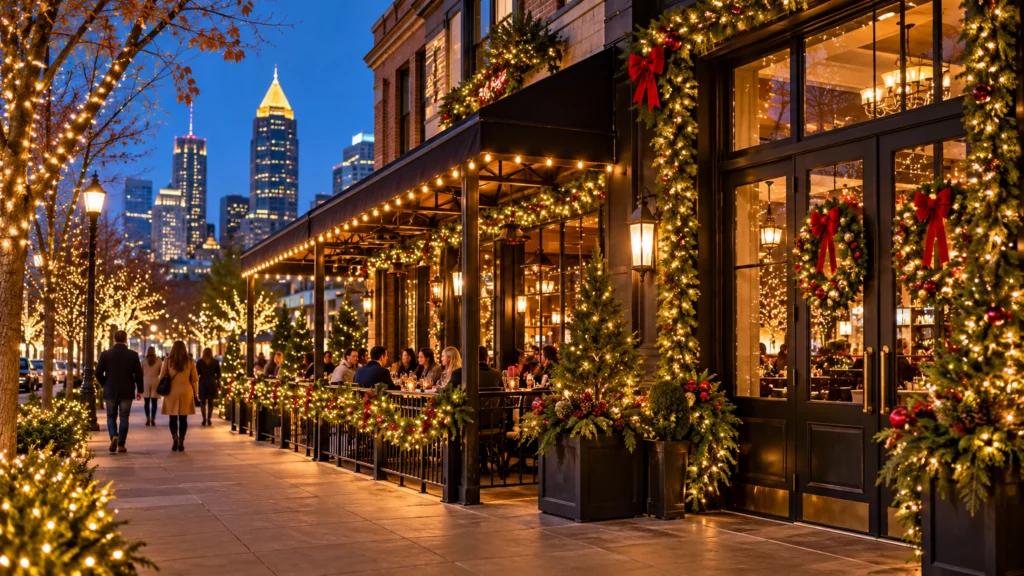
Good Atlanta storefront Christmas lighting does two jobs at once: it announces the season and supports a positive customer arrival experience. A restaurant wants its entry to feel welcoming during dinner service; a shop may want visibility from passing vehicles and pedestrians. Both need decorations that leave signage readable and daily operations uninterrupted.
Start with the customer journey rather than a decoration catalog. Where do people first notice the business? Where do they stop, queue, open doors, or look for a menu? A commercial Christmas light installation should consider those touchpoints before deciding how many rooflines, trees, or windows to illuminate.
Prioritize the main storefront sightline
A ground-floor tenant may have a small sign band, one door, and two display windows. A free-standing restaurant might be viewed from several sides of a parking lot. Select the most useful angle first. A simple awning or roofline accent can improve recognition when its scale matches the storefront and does not compete with the primary sign.
Test the proposed outline from the sidewalk and the nearest approach road. Lights should make the entrance easier to locate, not hide business hours, menus, accessibility information, or directional signs.
Keep the entry operational during peak periods
Restaurants and stores cannot always stop service for decoration work. Identify quieter access windows, delivery periods, outdoor seating arrangements, and any temporary closures required for safe work. The installation scope should identify who coordinates with management and how customers will be kept clear of equipment and staging areas.
Decorative elements must not obstruct accessible paths, emergency exits, door swing clearances, or queuing zones. Never treat a commercial doorway as unused simply because a lighting design looks symmetrical on paper.
Make window displays visible without reflections
Glass storefronts reflect exterior lamps. Very bright strands placed directly across glass can obscure merchandise or menu boards after dark. Consider outlining adjacent architectural trim or using selective vertical accents instead of densely covering the entire window frontage.
For businesses with significant interior lighting, view the window from outside at night. A color and brightness combination that seems strong in daylight may wash out against the interior, while another may create distracting reflections for diners seated near the window.
Decide how to use outdoor trees and patio features
A planted tree near the entrance can become a recognizable seasonal landmark. For a restaurant patio, light levels should not create harsh glare at tables or obscure service paths. For a retail strip, one consistent treatment across a series of trees may help visitors understand the shared shopping area.
The tree-lighting service is relevant when a property has an intentional landscape focal point. Confirm which planting beds, trees, or common areas are controlled by the business and which require the landlord’s consent.
Coordinate brand identity with holiday colors
A business does not need to choose between brand recognition and seasonal warmth. Warm-white architecture with a restrained accent color can preserve the storefront’s identity. Retailers with a strong color palette may use a matching seasonal accent, but large flashing patterns can compete with actual signs.
Consistency matters across multiple locations. If a company manages several branches, a simple specification for color temperature, signage clearance, and entry treatment can make the holiday presentation recognizable without requiring identical building layouts.
Make maintenance and removal part of the operations plan
An outage directly over the entry may be more noticeable than one in a remote section. Designate the person who reports issues, and confirm how access for repairs will be coordinated during business hours. The commercial property checklist gives managers a framework for vendor coordination and season-long responsibilities.
Set expectations for removal after the holidays. Restaurants with outdoor dining and stores with frequent deliveries may need the same careful scheduling during takedown as during installation. Ask about post-season removal while approving the original project.
Prepare a useful storefront design brief
Include a front photo, operating hours, busiest customer periods, entrances and exits, signage locations, landlord approval requirements, patio or sidewalk rules, and the preferred date when the display should be active. Distinguish one must-have focal point from secondary optional details to keep the proposal easy to compare.
The strongest brief addresses not only appearance but daily operations. A beautiful installation that forces uncomfortable door access or repeated business interruptions is not a successful commercial design.
Frequently asked storefront-lighting questions
For mixed-use buildings, the commercial-versus-residential planning guide clarifies why site access and day-to-day operational needs affect the design.
Can a small storefront look festive without covering every window?
Yes. A clean fascia outline, entrance accent, or one tree can communicate the season while allowing merchandise and signage to remain visible.
When is after-hours installation useful?
It can reduce customer disruption, but timing depends on safe access, site rules, staffing, and the actual project. Confirm the appropriate installation window with the business and installer.
Who approves lighting in a leased retail space?
Approval may be required from the landlord, center management, or another authorized party. Document permissions for the exact surfaces and electrical connections involved.
Plan a display that supports business
Use the commercial lighting estimate form to share your storefront layout and operating constraints. A coordinated seasonal display should improve the arrival experience while allowing the business to continue working normally.