
About This Holiday Lighting Guide
Prepared by: Holiday Illumination Christmas Light Installation
Last updated: October 23, 2026
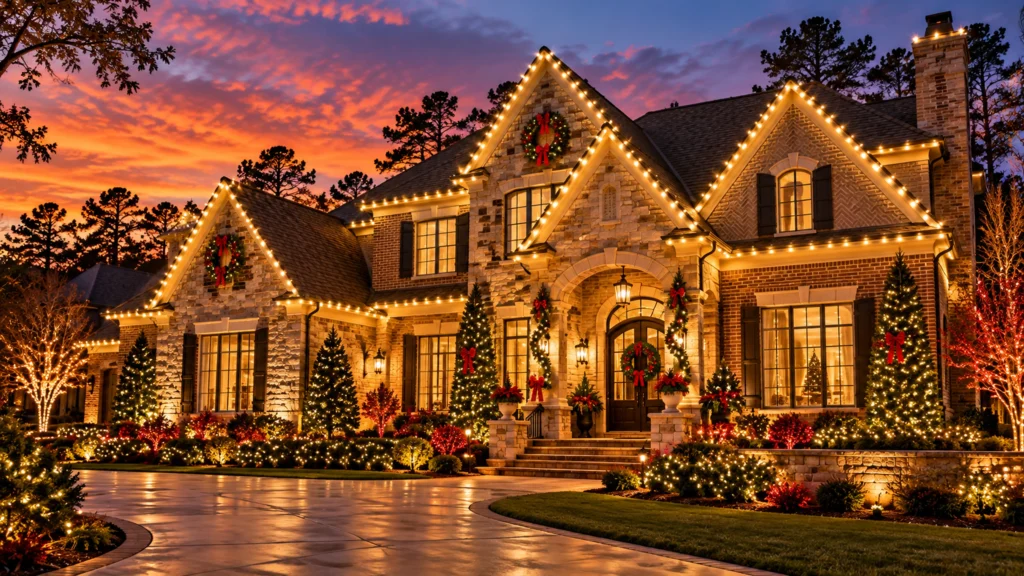
Choosing Christmas light colors for brick homes in Atlanta is easier when you start with the home’s materials instead of a trending palette. Red brick, pale limewash, gray stone, and warm mortar reflect light differently. Two displays with identical lamps can produce very different impressions against those surfaces after sunset.
The aim is not to make masonry disappear behind decorations. A well-planned holiday outline should reveal the house’s distinctive texture, proportions, and entry. Begin with the front elevation and compare it to the roofline lighting options that follow the architecture rather than covering the walls.
Read the undertones in the masonry
Red brick may contain orange, brown, violet, or charcoal undertones. Pale stone can lean creamy or cool gray, while mortar may contrast strongly with the units themselves. These differences influence whether a warm-white strand feels harmonious or overly yellow and whether a crisp white feels fresh or stark.
Evaluate samples after dark, ideally beside the actual facade. A daylight product photo will not show how nearby porch lamps, streetlights, or landscaped surfaces affect perceived color. Avoid selecting a temperature from a label alone without considering the masonry’s nighttime appearance.
Use the roofline to separate the house from the sky
A clean line along major roof edges can frame a masonry facade without competing with brick patterns. For a house with steep gables, outline the dominant front-facing shape before adding smaller peaks. On a low-slung stone house, the main eave may provide enough structure without lighting every ridge.
The lighting should strengthen the silhouette as viewed from the street. If the brick appears dark and the outline seems detached, a small entry accent can connect the roofline to the ground floor without covering the entire wall.
Give columns and arches individual consideration
Brick arches and stone columns can be focal points, but their shadows create a different visual rhythm from straight siding. A wreath centered in an arched recess may work better than outlining every curve. Thick stone columns can support restrained seasonal greenery that respects the size of the entrance.
Test whether placing lights beside textured masonry produces distracting shadows. Sometimes a small shift in placement or fewer decorative elements produces a calmer, more architectural effect.
Decide when multicolor is appropriate
Traditional red-brick homes can handle a classic multicolor roofline, but additional colors in wreaths, bushes, and windows may overload the palette. A simple method is to choose one dominant treatment and reserve a second color family for one limited feature such as the front entry.
The warm-white versus multicolor guide explores how palettes affect the feeling of an Atlanta home. For stone with several natural colors, a restrained scheme may let the material remain the visual anchor instead of fighting the roofline.
Account for holiday decorations that are not lights
Wreath ribbon, greenery, porch ornaments, and painted front doors introduce additional colors. A lighting decision made in isolation may conflict with existing decorations once everything is installed. Photograph the assembled entrance and evaluate whether one element feels out of place.
If the front door already stands out, use complementary greenery or soft illumination rather than several new bright colors. If the entry is very dark, a deliberate accent can improve wayfinding and balance the roofline.
Consider reflective stone and whitewashed surfaces
Light-colored masonry can appear much brighter when nearby lamps shine directly onto it. Highly reflective areas may make close-set strands feel intense even though the same density looks modest on deep red brick. View the setup from the sidewalk and from inside the main living rooms if glare could be an issue.
Thoughtful placement matters more than forcing identical brightness across the entire property. A residential lighting consultation can combine roofline, entry, and landscape elements in proportions suited to the actual exterior materials.
Put the proposed palette into a simple brief
List the main brick or stone colors, trim and door colors, preferred warm or cool feel, and the parts of the house you want highlighted. Include a daytime elevation photo and an evening photo with existing exterior lights switched on. Identify must-have elements separately from optional wreaths or trees.
Then review the full-season scope: supplied lights, attachment approach, maintenance, and removal. The site’s service-inclusions resource can help you compare the design and seasonal responsibilities together.
Common questions about masonry home lighting
Include design priorities in the estimate; the Atlanta installation cost resource explains why decorative scope and access influence pricing more than a generic lighting package.
Do warm-white lights always look best on red brick?
They are popular, but the right effect depends on brick undertones, trim, existing lamps, and personal preference. Test the actual exterior at night when practical.
Can cool-white lights work with pale stone?
Yes, especially with cooler trim and modern architecture. Assess whether reflections or nearby warm lights create an unwanted mismatch.
Should I illuminate brick columns and the roofline?
Only if each contributes something distinct to the composition. A strong roofline and one well-scaled entrance treatment can be enough.
Match the lighting to the home
Send facade photos and your preferred palette through the free quote page. Holiday Illumination can assess a design that honors the natural masonry instead of simply adding the greatest number of lights.