
About This Holiday Lighting Guide
Prepared by: Holiday Illumination Christmas Light Installation
Last updated: September 3, 2026
Quick Answer
Safe Christmas light installation for an Atlanta roof starts with attachment methods and access planning. A clean display should not require unnecessary punctures, careless pulling on gutters, or rushed ladder placement around landscaping and walkways.
Property protection continues through the entire seasonal cycle. The installation plan should consider clips, cable routing, working clearances, weather, electrical access, pedestrian areas, and the removal process so the display can come down with the same care used to put it up.
Key Takeaways
- Match clips to the roofline and gutter application. Purpose-fit clips can secure roofline lighting without relying on nails or staples. The attachment method should be appropriate for the edge, shingle, gutter, or architectural detail being used…
- Plan ladder and working access before placing lights. Trees, slopes, driveways, shrubs, fragile surfaces, and pedestrian paths can all affect safe access. A professional plan considers where ladders or other access equipment can be positioned without…
- Route cords and connections deliberately. Connections should stay organized and positioned with outdoor exposure, walkways, landscaping, and the property electrical layout in mind. Loose or improvised routing can create both appearance and maintenance…
- Remove the display methodically after the season. Takedown should avoid pulling strands across roof edges, yanking clips from gutters, or dragging lighting through landscaping. Organized removal also makes it easier to inspect and store components…
Use Clips Instead of Nails or Staples on Rooflines
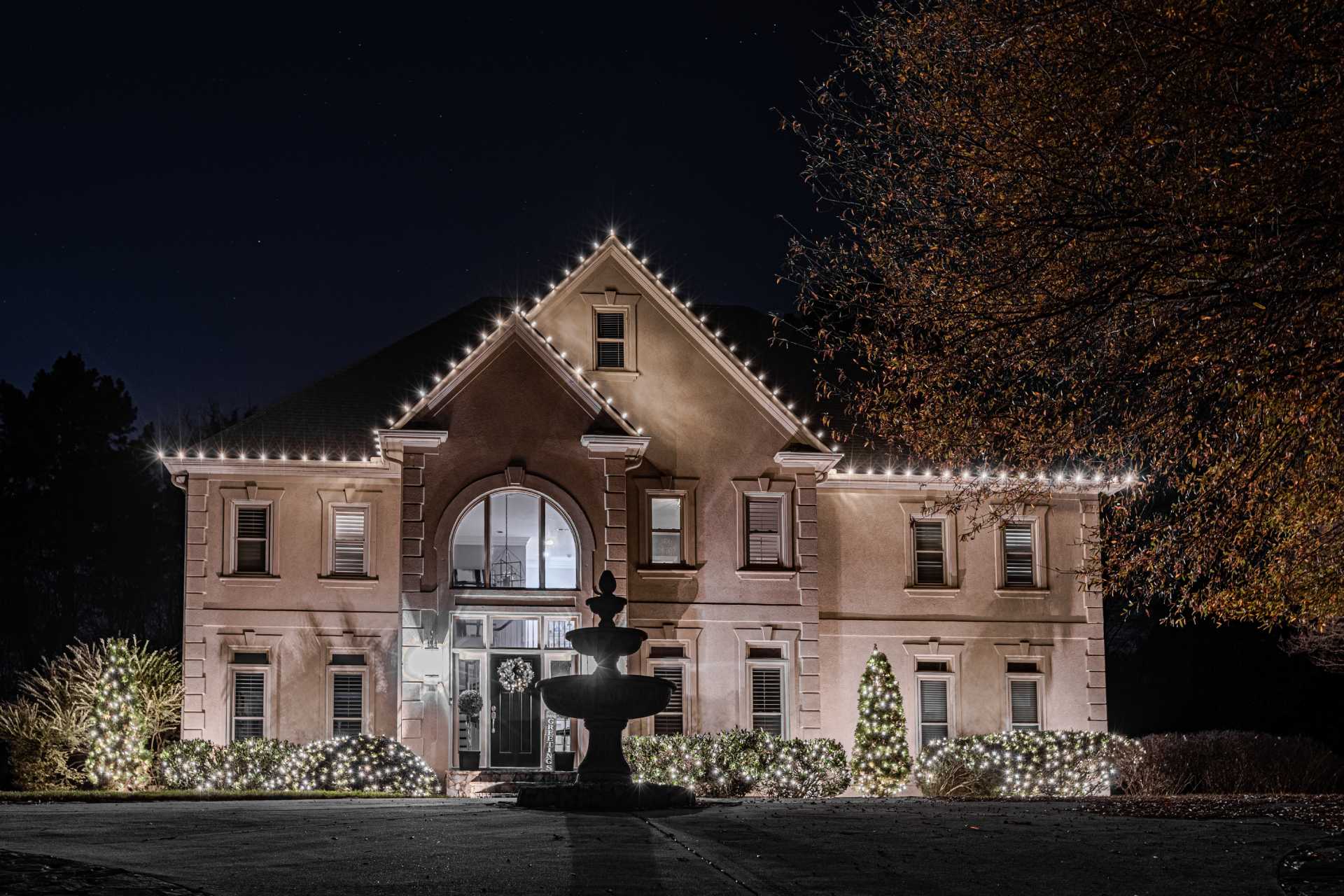
Roofline and gutter lighting can be secured with purpose-fit clips rather than nails or staples. Avoiding unnecessary punctures is one of the simplest ways to reduce the risk of damage while still creating a clean architectural outline.
Plan Access Before Installation Begins
Safe access matters around steep roof sections, tall trees, landscaping, driveways, and commercial pedestrian areas. The installation plan should account for ladders, working clearances, fragile surfaces, traffic, and the safest sequence for reaching each display area.
Treat Removal as Part of Property Protection
Post-season takedown should be deliberate rather than rushed. Removing clips, strands, and landscape lighting carefully, keeping components organized, and avoiding unnecessary pulling on gutters, plants, or architectural features helps protect the property and prepares the display for storage or the next season.
Step-by-Step Planning Framework
Match clips to the roofline and gutter application
Purpose-fit clips can secure roofline lighting without relying on nails or staples. The attachment method should be appropriate for the edge, shingle, gutter, or architectural detail being used and should avoid forcing hardware where it does not fit.
Plan ladder and working access before placing lights
Trees, slopes, driveways, shrubs, fragile surfaces, and pedestrian paths can all affect safe access. A professional plan considers where ladders or other access equipment can be positioned without creating unnecessary property risk.
Route cords and connections deliberately
Connections should stay organized and positioned with outdoor exposure, walkways, landscaping, and the property electrical layout in mind. Loose or improvised routing can create both appearance and maintenance problems.
Remove the display methodically after the season
Takedown should avoid pulling strands across roof edges, yanking clips from gutters, or dragging lighting through landscaping. Organized removal also makes it easier to inspect and store components for the next season.
Common Mistakes to Avoid
- Using nails or staples where a non-puncturing clip method can be used instead.
- Placing ladders without considering slopes, landscaping, traffic, or fragile exterior surfaces.
- Leaving cords or connections loose across walkways or exposed areas.
- Rushing takedown and pulling lights, clips, or wires against gutters, plants, or roof edges.
The purpose of this checklist is to make the scope clearer before installation. It also makes estimates easier to compare because design, access, service, removal, and property constraints are documented instead of assumed.
Frequently Asked Questions
Can Christmas lights be installed without nailing into the roof?
Yes. Roofline and gutter lighting can commonly be attached with purpose-fit clips rather than nails or staples, reducing unnecessary punctures.
Why is removal part of roof and property protection?
Careless takedown can pull on gutters, roof edges, plants, or architectural details. A deliberate removal sequence reduces unnecessary force and keeps materials organized.
Does weather affect whether installation should proceed?
Yes. Outdoor work should account for rain, wind, wet surfaces, and other conditions that can make roof or ladder access unsafe. Scheduling may need to change when conditions are not appropriate.
What should homeowners point out before installation?
Mention fragile landscaping, steep or unusual roof sections, gated areas, electrical limitations, pedestrian routes, recent exterior work, and any surfaces that require special care.
Related Holiday Lighting Services & Resources
Roofline Lighting · Tree Wrapping · Removal · Christmas Light Installation Atlanta · Holiday Lighting Resources · Request a Free Estimate
Plan the Next Step for Your Property
Use this guide to narrow the design, timing, access, and seasonal-service questions that matter for your property. When you are ready, request a property-specific estimate so Holiday Illumination can confirm the exact scope, availability, installation requirements, in-season support, takedown, and storage options that apply to the address.