
About This Holiday Lighting Guide
Prepared by: Holiday Illumination Christmas Light Installation
Last updated: October 19, 2026
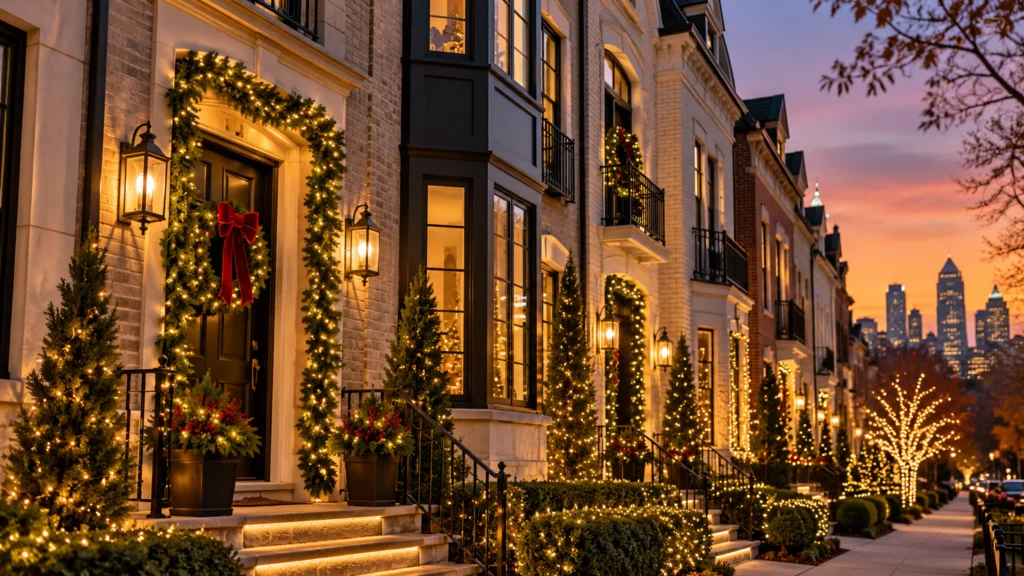
Atlanta townhome Christmas lighting calls for a different design strategy from a detached house on a wide lot. A slim facade, close neighbors, short setback, and shared architectural lines can make even modest decorations look intense. The objective is to create a distinct seasonal identity while respecting the limited space and everyday function of the property.
Start by viewing the townhome from the street at a realistic distance. People may see it from just a few steps away, so small details matter more than on a deep suburban lot. A compact residential Christmas lighting design can be effective when the roofline, doorway, and one vertical feature share a clear visual theme.
Identify the boundaries of the display
A townhouse facade may visually connect to adjacent homes, but its lighting plan still needs clear ownership and attachment boundaries. Confirm which roof edges, trim, railings, and front-yard elements belong to the unit. In a condominium or managed development, some exterior components may be common property rather than privately controlled surfaces.
Obtain any required written approvals before installation. A beautiful design is not useful if an HOA later requires unapproved fixtures to come down. Keep a short record of the approved color, installation areas, removal period, and any requirements for electrical connections.
Let the entry carry more visual weight
Because the facade is narrow, a front door treatment often gives the greatest return for the space. A wreath, restrained porch-column accent, or narrow architectural outline can provide a seasonal cue without surrounding every window. If the door sits several feet above sidewalk level, decorative elements should complement the stair or landing rather than visually crowd it.
Photograph the entrance from the sidewalk. A railing wrap may look attractive from the front but interfere with people using the handrail. Keep steps, locks, doorbells, address numbers, and deliveries unobstructed.
Use short rooflines with deliberate spacing
A compact roofline can still communicate the shape of a townhome when bulb spacing is consistent and corners are clean. Avoid adding many tiny disconnected runs that are difficult to distinguish from adjacent decorations. Where roof and trim access is complex, focus on a smaller set of visible edges rather than forcing continuous coverage.
The roofline installation overview describes how a clean line depends on roof pitch, gutters, attachment methods, and access. Shared walls and tight side yards make those constraints especially important in townhome developments.
Consider neighbors, glare and pedestrian sightlines
Close windows and narrow sidewalks can make bright, flashing, or improperly aimed lighting intrusive. Consider bedroom windows across the street, the neighboring front door, and common walkways when choosing brightness and timing. A steady color scheme may deliver more polish than multiple fast effects in a compact setting.
If the development already has coordinated architectural or landscape lighting, choose accents that complement it. Keep extension routes out of shared paths and avoid obstructing curb access or parking movements.
Design for a courtyard, balcony or small front garden
A single planter, small shrub, or discreet balcony feature can add depth to a narrow display. But a balcony introduces its own exposure, securing, and possible association requirements. Do not assume a decorative string rated for sheltered indoor use is appropriate outdoors, and do not route cords through doors or windows in a way that creates damage or entrapment hazards.
On a small front garden, one selected accent is usually enough. Leaving portions of the facade unlit can make the roofline and doorway feel stronger. The outdoor holiday lighting overview can help frame how architecture and planting areas relate.
Prepare a townhome-specific estimate
Share the unit address, street-facing photo, governing approval requirements, known exterior restrictions, and the areas you control. Identify whether installation access requires notice to neighbors or access through a common area. Explain the desired look in one sentence, such as ‘simple warm-white outline with a welcoming front door.’
Request a scope that includes mounting approach, seasonal service, and removal. Holiday lighting scope guidance can help you compare proposals on identical terms rather than comparing only the number of strings.
Common townhome-lighting questions
Where shared exterior features are involved, the existing HOA approval planning resource provides additional questions to resolve with the development before decorating.
Can a narrow facade still have a memorable display?
Yes. Consistent roofline spacing and a well-designed entry can be more memorable than many competing accents. Scale the design to the short viewing distance.
Do I need approval if lights are temporary?
Possibly. The answer depends on the development’s governing rules and the ownership of exterior surfaces. Check those documents rather than assuming all seasonal decorations are exempt.
Should my lights match my neighbors’ colors?
Not necessarily, but a compatible color temperature and restrained brightness can create a more cohesive streetscape when homes stand close together.
Plan an elegant compact display
Use the site’s free quote form to request a property-specific townhome lighting plan. The most successful narrow-lot displays make smart use of limited space rather than treating the smaller facade as a limitation to hide.