
About This Holiday Lighting Guide
Prepared by: Holiday Illumination Christmas Light Installation
Last updated: October 21, 2026
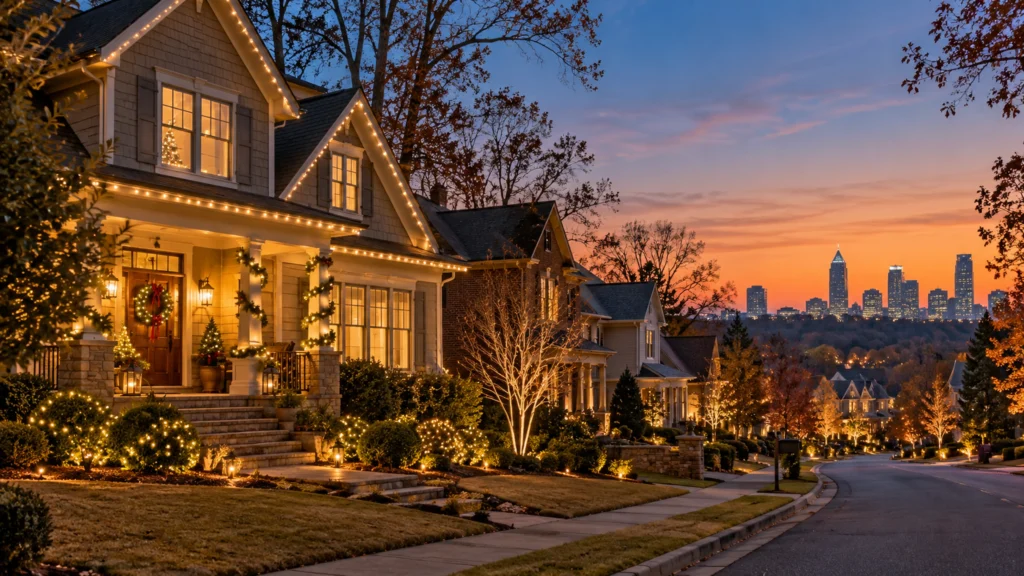
Neighbor-friendly Christmas lights in Atlanta can be festive without sending unwanted glare into nearby windows. In neighborhoods with narrow setbacks, hillside lots, and homes facing each other, the most successful display is often the one that feels deliberate rather than overpowering. A strong design lets neighbors appreciate the view without having the lights dominate their indoor space.
The process starts with sightlines. Look outward from the front yard, not only back toward your own facade. A roofline may look excellent from the driveway but sit directly opposite an upstairs bedroom. The residential installation overview helps frame how architecture, entrances, trees, and landscaping can be coordinated as one display.
Understand the difference between brightness and glare
Brightness contributes to visibility; glare happens when an intense source or reflection is uncomfortable in someone’s field of view. A few exposed bulbs pointing toward a window can feel more intrusive than a larger, well-positioned outline. Dark windows, glass doors, and shiny exterior surfaces can change how a light source appears at night.
Walk the public-facing perimeter after dark. Ask whether you see a pleasing shape or individual lamps shining directly toward you. A thoughtful mounting position, less aggressive effect, or smaller illuminated area may solve a glare problem without sacrificing the holiday design.
Plan the hours of operation intentionally
Lights do not need to run all night to make an impression. Consider typical family routines, nearby sleeping areas, and how long the neighborhood remains active in the evening. A consistent on-off window can prevent accidental overnight operation and avoid creating unnecessary light spill during quiet hours.
Timer arrangements should match the installed equipment’s ratings and actual electrical setup. Ask the installer to explain the operating schedule and who is responsible for adjusting it after installation, particularly if seasonal daylight changes affect the desired start time.
Direct attention toward your house, not neighboring windows
A roofline outline usually reads well when bulbs follow the architecture instead of projecting light outward. Lower-level accent choices can also reduce conflict: doorway lighting and selected shrubs may create seasonal warmth without high-intensity sources near second-story sightlines.
If tree lighting is included, select a trunk or branch structure that supports the street view rather than a branch that extends toward the adjacent property. The tree-wrapping service can be considered as a focused alternative to lighting an entire yard.
Choose color and motion with the setting in mind
Steady colors are often easier to live beside than rapid flashes or repeated full-brightness changes. A busy animated display can be fun for an event but distracting in a closely spaced residential street. If movement is important, consider where the effects will be visible and how they will look from the homes across the road.
The site’s warm-white and multicolor comparison covers the visual goals of different palettes. The right choice for a neighbor-friendly design is the one that achieves personality without creating unnecessary visual noise.
Give special attention to reflective surfaces
Glass storm doors, polished metal railings, pale siding, and wet pavement can amplify visual discomfort. Positioning a strand away from a reflective wall or reducing density near a porch window can improve comfort. Evaluate the lighting from seated eye level as well as from the curb, because low and high sightlines may behave differently.
A design that feels balanced in a daytime mockup should be checked after dark whenever possible. Existing security lights and streetlamps can alter the final appearance, so judging one string by itself may be misleading.
Create a friendly plan for HOAs and shared streets
Some communities specify operating hours, acceptable colors, or seasonal removal dates. Even when rules are not strict, voluntary coordination can reduce friction. If neighbors are planning their own displays, a compatible palette or shared timing can make the streetscape feel more cohesive without requiring identical decorations.
Review the site’s holiday lighting planning guide for questions to settle before installation. On narrow lots or shared access roads, keep cables and decorative features out of common paths.
Adjust the design before adding more lights
When the first draft feels underwhelming, start by rebalancing the display rather than increasing intensity. A stronger focal point at the entrance, more consistent spacing on the roofline, or the removal of a competing effect may be enough. Document must-have and optional sections so changes can be made without replacing the entire design.
Also agree on a simple process for reporting a concern during the season. A fast adjustment to a timer or overly direct accent can preserve both the holiday atmosphere and good neighbor relationships.
Questions homeowners often ask
If community rules apply, use the HOA holiday lighting guide to organize operating-hour, approval, and shared-area questions before finalizing a display.
Are multicolor lights automatically more intrusive?
No. Placement, intensity, motion, and operating hours often matter more than hue alone. A steady multicolor line may create less disturbance than a flashing white display.
Should I turn lights off at a fixed time?
A predictable evening schedule is a practical way to reduce overnight light spill. Choose a time that fits local expectations and any applicable community rules.
Can I keep a bright roofline while protecting nearby windows?
Often the effect can be improved through placement, selecting which elevations are lit, and limiting direct exposure. The actual property and viewing angles determine the best compromise.
Build a considerate seasonal display
Share nearby window sightlines, property setbacks, community rules, and any timer preferences with Holiday Illumination when requesting a property-specific holiday lighting quote. A neighbor-friendly design can still be memorable; it simply makes the impact intentional.